The Season's Harvest: How to Carry the Right Things Into What Comes Next
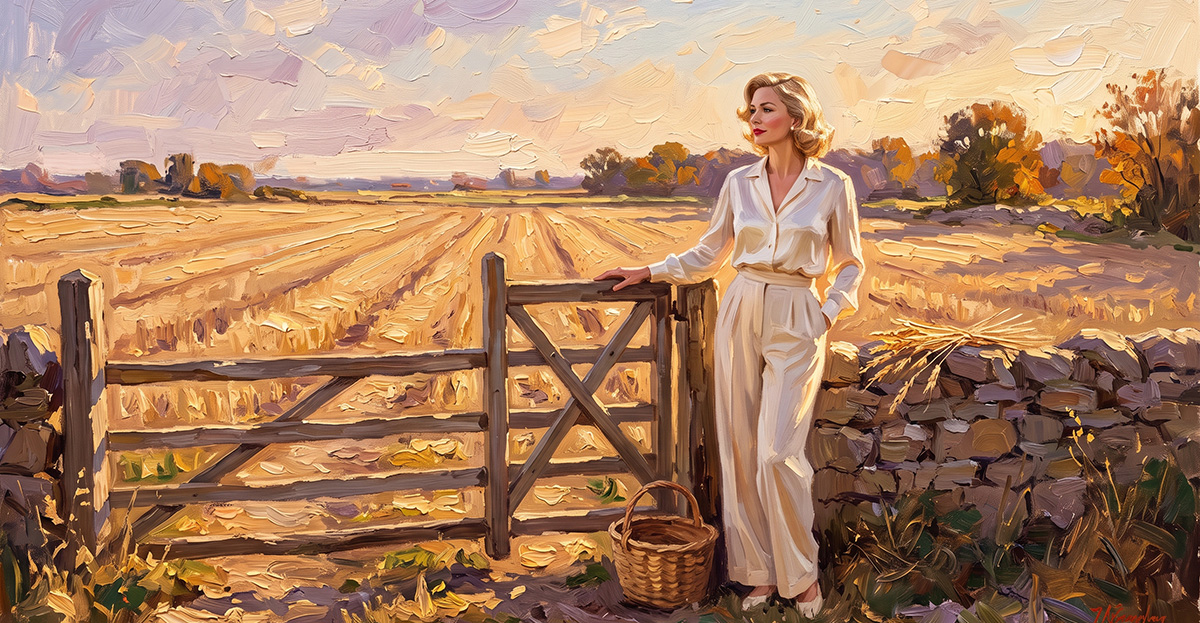
A farmer does not bring the whole field into the barn.
She walks the rows at the end of the season and makes a hundred small decisions. This stalk, yes. That one, turn it back into the soil. Not because the field failed her. Because a field that gives everything to the barn has nothing left to feed the next planting. The harvest was never about collecting all of it. It was about knowing which part of the season becomes food, and which part becomes ground.
Most women reach the end of an intense season and try to do the opposite. They want to bring all of it forward. Every strategy that worked, every identity they tried on, every habit that got them through, every plan they made in the middle of it. Nothing gets released, because releasing anything feels like admitting some part of the season was wasted. So the barn fills with things that were never meant to overwinter, and the next planting starts crowded before it starts at all.
Here is the truer version. Every season ends. The woman who has done the real work of a full season, who has been seen, who knows who she is, who trusts her worth, who has learned to discern what's actually hers, walks into what comes next as a different woman than the one who started it. Not finished. Not arrived. Different. That difference is the harvest. And the harvest, on its own, is enough to carry forward.
The Myth of the Empty Field
There's a quiet cultural script that says an ending should leave you with nothing but a clean slate. Close the chapter, wipe the board and start fresh. It sounds efficient, even virtuous, and it is almost entirely wrong for how real growth actually works.
A field is never empty after a harvest, not really. What's left behind is soil that has been changed by everything that grew in it this season, richer in some places, depleted in others, carrying the structure of roots that held it together through storms. The next planting doesn't start from nothing. It starts from exactly what the last season made of the ground.
The same is true of you. When a season closes, whether it's a fiscal quarter, a launch cycle or a longer stretch of personal transformation, you are not returning to some neutral starting point. You are standing in soil that has been genuinely changed by what you just lived through. The instinct to treat an ending as a wipe-clean moment isn't humility. It's a kind of self-erasure dressed up as productivity and it costs you the very thing the season was building.
This matters especially for women who were raised, as so many of us were, to measure worth by output rather than by becoming. If the only thing that counts is what got finished, then everything unfinished at season's end feels like failure and everything finished feels like it needs to be immediately followed by more. There is no room in that accounting for the quieter thing that actually happened underneath the visible output: the fact that you are, demonstrably, not the same woman who started the season. That fact doesn't show up on a task list. It shows up in how you handle the next hard conversation, the next unclear decision and the next opportunity that used to make you say yes out of fear and now gets met with something steadier.
Decision Fatigue Is Not Reflection
Most women's version of a season review is really a decision-making exercise wearing reflection's clothes. What worked. What didn't. What to keep doing. What to stop. It's useful, as far as it goes, and it goes almost nowhere near the actual harvest.
Decision-making sorts activities. It asks whether a tactic produced a result and whether to repeat it. Harvest sorts you. It asks what capacity you now have that you didn't have before, and whether that capacity is the kind that compounds on its own or the kind that only existed because one specific set of circumstances forced it into being for a while.
This distinction matters because the two questions produce completely different answers. A launch strategy might have worked beautifully and still not be part of your harvest if the win depended entirely on a market condition, a platform algorithm or a version of you running on adrenaline that isn't sustainable past this one season. Meanwhile, a project that technically underperformed might be carrying the single most valuable thing you built all year: the fact that you finally said no to a client relationship that was costing you more than it paid, or the fact that you delivered something imperfect and lived through the discomfort of imperfection without abandoning the work.
Decision fatigue happens when you try to make both kinds of decisions with the same muscle. You end up either keeping tactics that no longer serve you because they "worked," or discarding genuine capacity because it didn't produce a clean metric. Real seasonal reflection separates these from the start. One column asks what to repeat. A different column entirely asks who you have become. Only the second column is the harvest.
Most quarterly reflection and planning rituals never make this split explicit, which is exactly why they leave women feeling like they did the work of looking back without actually gaining anything from it. You can fill out every metric on a review template and still walk away with no clearer sense of who the season made of you. That question was never on the template to begin with.
What Actually Compounds
Not everything that happened this season deserves a place in what comes next and the discernment required here is more precise than most seasonal reviews attempt.
Three qualities tend to mark what's genuinely worth carrying forward. First, it built real capacity rather than simply producing a result. A capacity is something you now have access to regardless of circumstance: a clearer sense of your own worth, a nervous system that can tolerate a harder conversation than it used to, an ability to make a decision without needing everyone's approval first. Results are wonderful, and results without capacity evaporate the moment conditions change.
Second, it expressed something true about your actual design rather than something you forced because the season demanded it. Every intense season asks you to do things that don't come naturally, and sometimes that stretch is exactly the growth you needed. But there's a difference between a stretch that revealed a real capacity and a performance you sustained purely through will. The first belongs in the harvest. The second was the cost of the season, not its gift, and carrying it forward only recreates the same exhaustion in a new setting.
Third, and this is the quiet one, it compounds without your constant attention. A genuine harvest item keeps paying you back even when you're not actively working it. The client relationship you finally priced honestly keeps paying you honestly. The boundary you learned to hold once now costs you almost nothing to hold again. Compare this to something that only produced value because you were white-knuckling it into place every single day. That's not a harvest. That's a debt you were servicing and it comes due again the moment your attention moves elsewhere.
Sort what happened this season against these three qualities honestly, and you will likely find the true harvest is smaller and far more valuable than the long list of things you accomplished. That's not a disappointing outcome. It's the entire point.
The Harvest Inventory
Here is a way to hold this discernment concretely, a set of four questions worth sitting with at the close of any real season, whether that season lasted a quarter or a decade.
Did this build a capacity, or produce a result? Name the specific thing you can now do that you couldn't reliably do before this season began. If nothing comes to mind beyond a list of completed tasks, sit with that honestly rather than rushing to manufacture an answer.
Would I still choose this if the circumstances that demanded it disappeared tomorrow? If the honest answer is no, you likely forced this rather than expressed it, and it belongs to the season that's ending rather than the one that's beginning.
Does this keep paying me without my constant attention? Genuine capacity compounds quietly. If something only holds together because you're actively propping it up every day, it's not harvest. It's maintenance, and maintenance you can consciously choose to stop.
What would it cost me to set this down, and is that cost real or is it identity? Sometimes we carry things forward not because they serve us but because releasing them feels like losing a version of ourselves we've grown attached to, even a version we outgrew months ago. Naming the difference between a real cost and an attachment to an old identity is often where the deepest release happens.
Run everything from this season through these four questions, out loud or on paper, and you'll come away with something far more useful than a highlight reel. You'll come away with an honest map of what to actually carry.
Notice that none of these four questions ask what performed well. That omission is intentional. Performance is a decision-making metric, and it belongs to a different kind of review entirely. The Harvest Inventory exists to ask a deeper and slower question, the one most reviews skip past on the way to planning next quarter's tactics.
Why Letting Go Isn't Loss
The word "release" tends to trigger a grief response before it triggers relief, and it's worth naming why, because the discomfort is legitimate even when the release is right.
Every strategy, habit or identity you built during an intense season took real energy to construct. Setting it down can feel like betraying that investment, as if the only way to honor the effort is to keep using the thing forever, regardless of whether it still fits. But effort spent building something and value in continuing to carry it are two entirely separate questions, and conflating them is one of the most common reasons capable women end up dragging an entire warehouse of expired strategies into every new season.
A genuine release doesn't erase what the thing gave you while it was active. The confidence you built by holding a hard boundary once doesn't disappear just because you stop using that specific boundary in that specific form going forward. The capacity stays. Only the container gets set down. This is the distinction that makes release possible without grief calcifying into regret: you are not discarding the growth. You are simply refusing to keep carrying its packaging once the contents have already become part of you.
There is also a quieter permission hidden in this. If letting something go doesn't erase what it gave you, then you're free to release things that served you beautifully and simply belonged to a season that's over. You don't need a strategy to have failed in order to justify setting it down. You only need to notice that it was built for a version of your business, or a version of you, that the season has already moved past.
This is worth sitting with for a moment, because it runs against nearly everything most of us were taught about consistency. We were told that changing course means the original plan was wrong, that abandoning a habit means we lacked discipline and that stopping something before it's exhausted every possible use means we're quitters. None of that has to be true. A strategy can have done exactly what it was meant to do and still be finished. Consistency was never meant to mean carrying every tool forward forever. It was meant to mean showing up honestly, season after season, with whatever the current season actually calls for.
The Feminine CEO's Relationship to Endings
A specific kind of exhaustion follows businesses built by women who never learned to trust an ending. Every quarter becomes a fresh start from zero, because nothing from the last one was ever formally harvested. Every launch reinvents strategy the last launch already proved. Every year the same lessons get relearned at real cost, because the capacity built by living through them the first time was never named, claimed, and consciously carried forward.
This is not a discipline problem. It's a trust problem. A business that harvests well is a business run by a woman who trusts that what she's already built and become is a genuine foundation, sturdy enough to build on rather than something that has to be perpetually re-proven. That trust changes the entire texture of how a season closes. Instead of an anxious scramble to make sure nothing was wasted, there's a settled, almost ceremonial quality to naming what stays and what gets released.
You can feel the difference between these two businesses from the outside, even before you understand why. One always sounds slightly breathless, forever announcing a fresh start, forever promising this is the season everything finally clicks. The other sounds settled, even mid-growth, because growth for her isn't a series of restarts. It's a single accumulating story she trusts enough to keep building on.
This is also, not incidentally, exactly what makes longevity possible. Businesses that compound over years, rather than starting over every few months, are built by women who have learned to trust their own harvest. They are not doing more each season. They are becoming more each season, and carrying that becoming forward instead of leaving it behind with everything else that gets discarded in the name of a fresh start.
The next season doesn't need you to arrive empty-handed. It needs you to arrive as the woman this season already made you, carrying only what's actually yours, ready to build on ground that has genuinely changed.
Ready to translate this into an actual system you can run this week? Thursday's post gives you the full “Complete, Carry, Release” framework, the three-part practical process for closing this season with intention before the next one begins, including the exact AI-assisted workflow for auditing an entire quarter's worth of projects without losing a single thing worth keeping.
Related Reading
● The Honest Inventory: How to See What Your Business Has Already Become
● The Worth Audit: How to Find Where Your Business Is Underselling Before the Client Even Arrives
● Discernment Over Decision: How Deep Self-Knowledge Changes Your Relationship With Opportunity
